
-
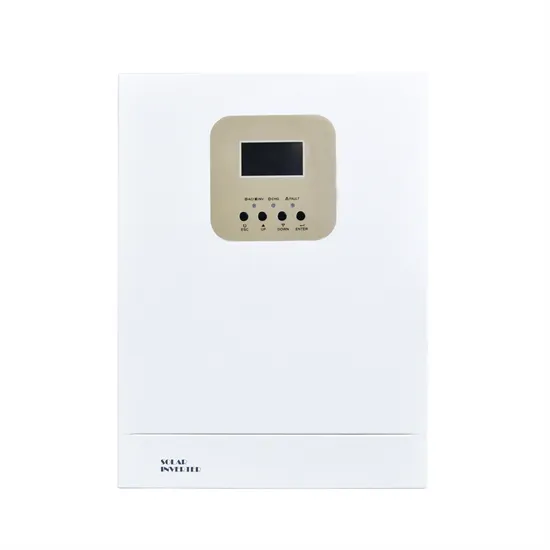
Spanish telecommunication base station inverter grid-connected management regulations
This regulation is structured around several key areas, including: greater control and planning by the National Commission for Markets and Competition (“ CNMC ”) and Red Eléctrica (“ REE “), regulatory reforms planned for the next fifteen months, greater transparency in access to. . This regulation is structured around several key areas, including: greater control and planning by the National Commission for Markets and Competition (“ CNMC ”) and Red Eléctrica (“ REE “), regulatory reforms planned for the next fifteen months, greater transparency in access to. . The purpose of this report is to provide a brief explanation of the events of the incident in the Spanish Penin-sular Electrical System that took place the 28th of April 2025. The report has been prepared in compliance with the provisions established in Operating Procedure 9, which states in. . Spain's Official State Gazette (BOE) today publishes the Royal Decree amending RD 413/2014, which updates the order of grid-access priority for electricity to boost the penetration of storage and flexible technologies. The revision encourages all facilities to supply the system operator with the necessary resources for voltage control. Credit: berni0004/Shutterstock. Spain's. . Royal Decree-Law 7/2025 (“ RDL 7/2025 “) addresses the recent blackout of the Spanish electrical system by establishing new, innovative regulations on electricity security.
[PDF Version]
-
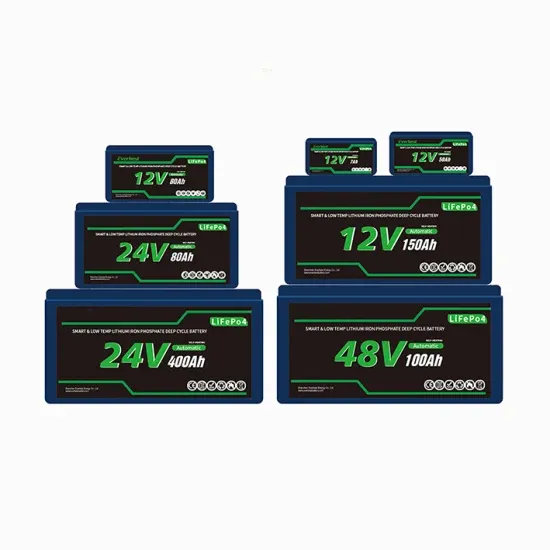
Uninterrupted power supply for high altitude communication base stations
The integration of UPS power supplies with the communication industry, coupled with the specific requirements for high-temperature and high-altitude environments, contributes to ensuring stable power supply quality and uninterrupted communication services. . Paschen's curve describes electric discharge voltage as a function of atmospheric pressure and wiring/electrode separation (defining the minimum voltage for breakdown in air to be 327V. ) Voltages, steady-state or repeated transients higher than 327V are referred as high voltages Air at high. . Many remote areas lack access to traditional power grids, yet base stations require 24/7 uninterrupted power supply to maintain stable communication services. For base stations located in deserts or other extreme environments, independent power supply is essential, as these areas are not only. . For the design engineer, the main considerations when designing for applications where altitude is a factor is understanding how high altitude can negatively impact the electronics within, as well as surrounding the power supplies, and complying with the safety regulations for these applications. . Power supply for high altitude installation of r if an alternate model that is designed for highe power electronics design. The safe operation of UPS power supply systems in. .
[PDF Version]
-
Kyrgyzstan aids in building wind power stations for telecommunication base stations
Hybrid energy solutions enable telecom base stations to run primarily on renewable energy sources, like solar and wind, with the diesel generator as a last resort. This reduces emissions, aligns with sustainability goals, and even opens up opportunities for carbon credits or green. . Kyrgyzstan has begun construction of its first-ever wind power plant, marking a significant step toward diversifying the country's energy mix and addressing chronic electricity shortages. The project covers Kazakhstan, Kyrgyzstan, Tajikistan, Turkmenistan, and Uzbekistan, serving as Germany's contribution to the EU Strategy for Central Asia (2019). Its. . State-owned power utility ESM is seeking consultants for feasibility studies for solar power plants of 60 MW and 100 MW in Bitola and its 50 MW Miravci wind power project in Gevgelija. The announcement was made by Kundus Kyrbasheva, head of the Green Stations Association, who described. . The investment project is being implemented by the joint-stock company Rosatom Renewable Energy. The construction period will be 12 months.
[PDF Version]
-
Where can I find wind power plants for telecommunication base stations in Laos
CellMapper is a crowd-sourced cellular tower and coverage mapping service. . The 600 MW Monsoon wind project, the first wind energy project in Laos and the largest wind farm in ASEAN has completed construction. Result After the completion of the 5G communication system based on PTN+ integrated small base station, IP transmission based on optical transmission, supporting The. . On March 20th, CGN Energy Technology and the Laotian government officially signed a 556MW wind power project development agreement, marking a new stage in the construction of a clean energy base for interconnectivity in the northern part of China and Laos. This project is an important component of. . POWERCHINA celebrates full capacity of the Laos 600MW Monsoon Wind Power Project. Ltd, an affiliated company with US's UPC Renewable Group, on November 13 signed a Memoradum on Understanding (MoU) on a feasibility study on wind power projects in Savannakhet province as well as a 500 kV power. . WARNING: Setting the type to DAS will cause the tower to split into individual cells. 53% of power generated in 2016 came from renewable sources. The Xayaburi run-of-river dam is expected to generate. .
[PDF Version]
-
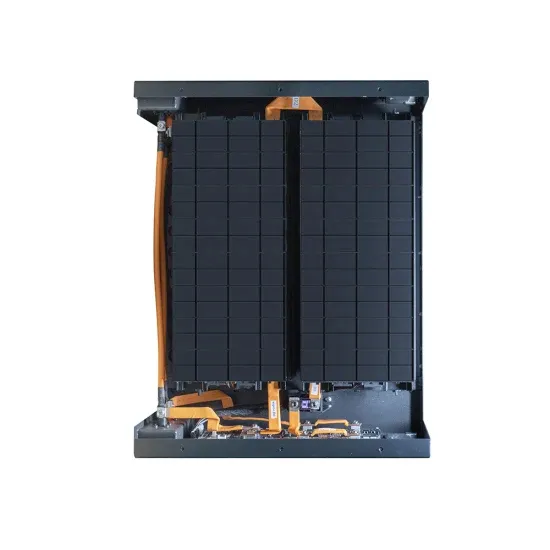
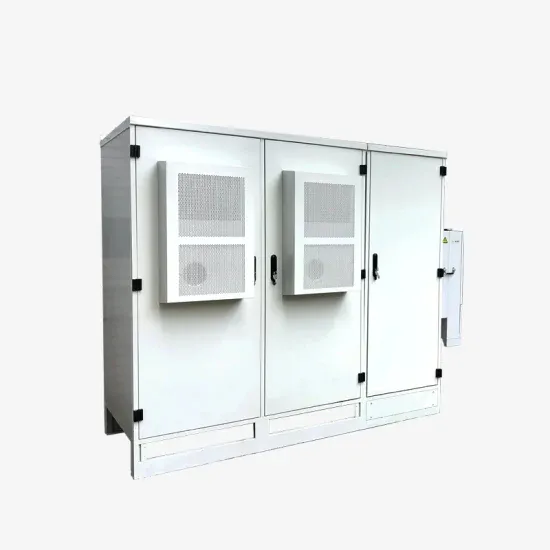
Liquid Cooled Energy Storage Battery Cabinet Thermal Management
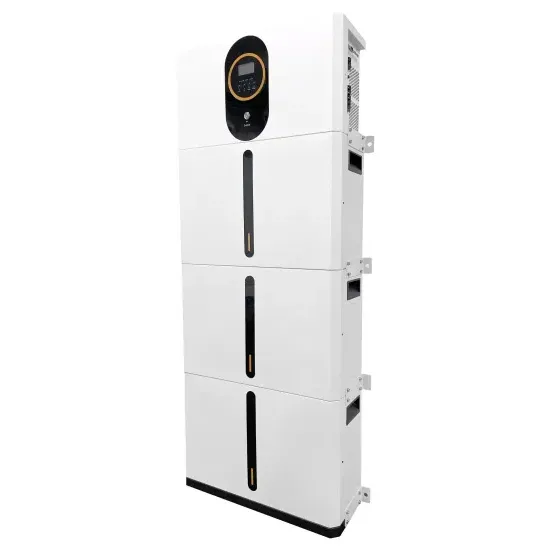
Liquid-cooled energy storage systems excel in industrial and commercial settings by providing precise thermal management for high-density battery operations. These systems use coolant circulation to maintain optimal cell temperatures, outperforming air cooling in efficiency and. . This study addresses the optimization of heat dissipation performance in energy storage battery cabinets by employing a combined liquid-cooled plate and tube heat exchange method for battery pack cooling, thereby enhancing operational safety and efficiency. The primary. . Excessive heat can significantly degrade battery health, reduce efficiency, and pose serious safety risks. To address this, the industry is increasingly turning to advanced solutions like the Liquid Cooling Battery Cabinet, a technology designed to maintain optimal operating temperatures for. . As large-scale Battery Energy Storage Systems (BESS) continue to evolve toward higher energy density and multi-megawatt-hour configurations, liquid cooling has become the mainstream thermal management solution. 72MWh): Introducing liquid cold plates allowed for tighter cell packing by more efficiently pulling heat away. Liquid was an advantage, improving lifespan and consistency. The 5MWh+ Era (Today): Aisle-less, “pack-to-container” designs create a solid, optimized block of. .
[PDF Version]
-
Design of photovoltaic power generation in the grid-connected inverter room of communication base station
This paper focuses on a new control strategy for single-phase photovoltaic inverters connected to the electrical power distribution network. In order to harvest the energy out of the PV panel, a Maximum Power Point Tracking (MPPT) algorithm is required. The grid-connected photo-voltaic system is one of the primary approaches to solar energy power conversion. the microgrid is a distributed system configuration with the generation, distribution, control, storage, and consumption connected locally. . There is a rapid increase in the amount of inverter-based resources (IBRs) on the grid from Solar PV, Wind, and Batteries. All of these technologies are Inverter-based Resources (IBRs). PV cells are usually connected together to make PV modules, consisting of 72 PV cells, which generates a DC voltage. .
[PDF Version]
 MENU