
-
How to buy Huawei smart photovoltaic panels
If you're evaluating options such as "how to choose Huawei solar system" setups, focus on ease of monitoring via the FusionSolar app, local service support, and compliance with regional grid-tie regulations. . HUAWEI FusionSolar advocates green power generation and reduces carbon emissions. It provides smart PV solutions for residential, commercial, industrial, utility scale, energy storage systems, and microgrids. It builds a product ecosystem centered on solar inverters, charge controllers, and energy. . When selecting a Huawei solar system, prioritize models with integrated string inverters like the SUN2000 series paired with LUNA2000 batteries for optimal efficiency, scalability, and smart energy management—ideal for both residential and light commercial use 1. Look for systems offering high. . La solar energy is mixed with revolutionary technology to enhance its capacity to the maximum. Rest assured in any climate, with a wider. .
[PDF Version]
-
Causes of local delamination of photovoltaic panels
At its core, delamination refers to the separation of layers in the solar module, which may include the encasing, backsheet, and photovoltaic layers. . Delamination in solar panels can occur due to various factors, including environmental conditions, manufacturing defects, and material incompatibility, compromising their performance and efficiency. Figure 1: PQP failure rates as reported in. . Abstract: The reliability of photovoltaic (PV) modules operating under various weather conditions attracts the manufacturer's concern since several studies reveal a degradation rate higher than 0. 8% per year for the silicon-based technology and reached up to 2. This urgent guide helps you identify warning signs and implement immediate protective measures to save your solar investment. ⚠️ Warning: Your solar panels are falling apart from the inside, and you. . Delamination within solar cells represents a significant challenge in photovoltaic technology.
[PDF Version]
-
Quotation for a 1MW Smart Photovoltaic Energy Storage Outdoor Cabinet Project
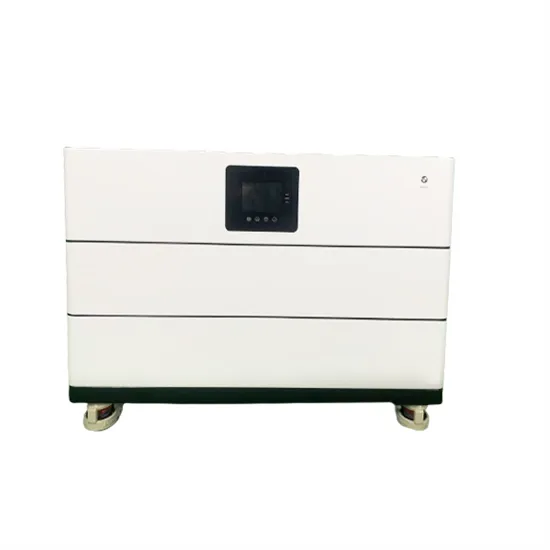
The price range for an outdoor energy storage cabinet typically lies between $3,000 and $15,000, depending on various factors, such as **1. additional features, and **5. These enclosures are designed to house and safeguard electronic components from environmental factors such as dust, moisture, and. . PVMars lists the costs of 1mwh-3mwh energy storage system (ESS) with solar here (lithium battery design). The price unit is each watt/hour, total price is calculated as: 0. 2 US$ * 2000,000 Wh = 400,000 US$. It is also necessary to. . Stable 1MW Output, Ideal For Industrial/Commercial Peak Shaving And Grid Load Regulation. 3MWh Capacity Supports Long-Hour Backup (Powers Medium Factories For Hours) And Solar/Wind Surplus Storage. NLR's PV cost benchmarking work uses a bottom-up. .
[PDF Version]
-
Which companies are better at selling photovoltaic panels to
Our picks for best solar panel brands are Maxeon, Panasonic, LONGi and QCells. Though Maxeon is our top pick for black roof panels, Panasonic is another great option (and could be easier to find in 2023). LONGi might be better for more powerful systems, but QCells is often a better. . N-type Technology Dominance: By 2025, virtually all leading manufacturers have transitioned to N-type cell technology (HJT, TOPcon, or Back-contact), delivering 19-24. 3% efficiency compared to older P-type cells at 17. This comprehensive guide will explore the. . Solar Panel Brand: These are manufacturers that design and produce solar panels (e. At the time of publishing, all our top picks have a maximum efficiency rating of. .
[PDF Version]
-
How to distinguish the quality of Jingao photovoltaic panels
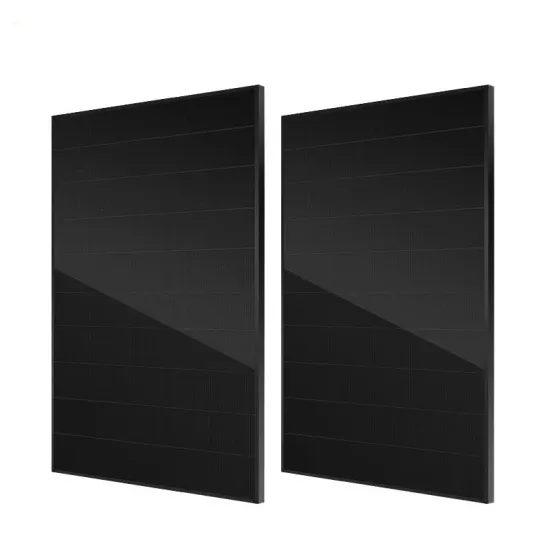
If you're asking how to choose Jinko solar panels that match your energy goals, start by evaluating panel type (monocrystalline vs. bifacial), power output (typically 380W–620W), efficiency (up to 22. . When selecting solar panels for residential or commercial use, Jinko Solar consistently ranks among the top global manufacturers due to its balance of efficiency, durability, and value 1. Jinko Solar is ranked fifth-best (#5) overall by the SolarReviews solar panel scoring system. 53% at prices 20-30% below premium competitors, making their Tiger Neo series the best value proposition in the 2025 solar market with superior N-type TOPCon technology. Proven Long-Term Reliability: With 11. . After watching this video, you will be able to discover the differences between the different product grades of #Jinko #solar panels.
[PDF Version]
-
How many panels are needed for a 230 kW photovoltaic system
Most homeowners need between 15-25 solar panels to power their entire home, but this number varies significantly based on your energy usage, location, and roof characteristics. . Location Impact is Massive: The same home using 1,000 kWh monthly could need just 16 panels in sunny Arizona but 22 panels in Massachusetts due to solar production ratios varying from 1. Future-Proofing Saves Money: Adding panels later costs significantly more due. . On top of that, we created a spreadsheet for a number of 100W, 200W, 300W, and 400W solar panels needed for 1kW, 3kW, 5kW, 10kW, and 20kW solar systems (check the chart further on). This is a basic mathematics game. All you need to do is sum up all the panel wattages to come to the solar system. . An off-grid solar system's size depends on factors such as your daily energy consumption, local sunlight availability, chosen equipment, the appliances that you're trying to run, and system configuration. The mode changes what you provide (e., daily vs monthly load, or target kW vs usage-based sizing). If you're willing to make such an investment, it may be a good idea to compare the cost of going solar versus solar savings.
[PDF Version]
 MENU