
-
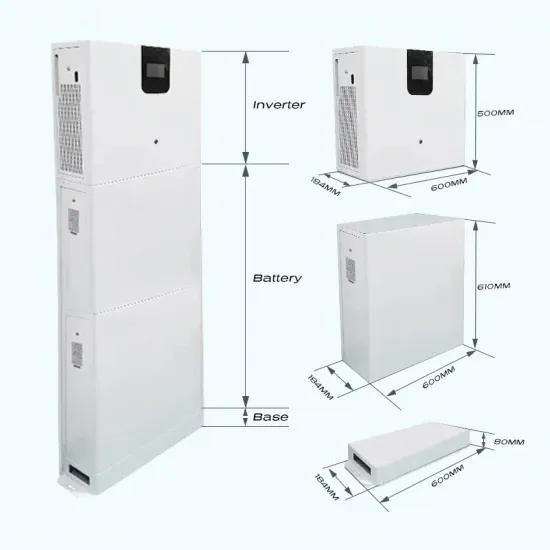
Thermal management system energy storage lithium battery
This review systematically focuses on the critical role of battery thermal management systems (BTMSs), such as active, passive, and hybrid cooling systems, in maintaining LIBs within their optimal operating temperature range, ensuring temperature homogeneity, safety, and. . This review systematically focuses on the critical role of battery thermal management systems (BTMSs), such as active, passive, and hybrid cooling systems, in maintaining LIBs within their optimal operating temperature range, ensuring temperature homogeneity, safety, and. . The transition to electric vehicles (EVs) is accelerating due to global efforts to reduce greenhouse gas emissions and reliance on fossil fuels. Lithium-ion batteries (LIBs) are the predominant energy storage solution in EVs, offering high energy density, efficiency, and long lifespan. During charging and discharging. .
[PDF Version]
-
Germany s solar thermal energy storage
The storage sector grew by 50% in 2024, with 600,000 new systems installed, consolidating the country as a European leader in the energy transition. This growth is part of a broader expansion across the continent, where projects exceed 66 GW in operation and an announced capacity of over 39 GW. . The first of its kind, this study offers an overview of the photovoltaics and battery storage market in Germany. But here's the kicker: this unglamorous tech now heats over 2 million German homes and could slash. . In July 2024, construction of the third-largest solar thermal plant in Germany began in Stralsund, Mecklenburg-Western Pomerania. According to the German Energy Storage Association (BVES), the energy. . Energy storage systems are an integral part of Germany's Energiewende ("Energy Transition") project. While the demand for energy storage is growing across Europe, Germany remains the European lead target market and the first choice for companies seeking to enter this fast-developing industry.
[PDF Version]
-
China Shipbuilding New Energy Solar Thermal Energy Storage
China State Shipbuilding Corporation (CSSC) recently unveiled what they're calling the " Iceberg Project " – not a new cruise ship, but a 800MWh thermal energy storage system using phase-change materials. . This new CSP technology (Beam-down tower) is the first project of this technology to be built within the “corporate-scale” series of 30 new CSP plants in 1 GW renewable energy parks. Photo: Chi Jingyi/GT Editor's Note: As the Chinese economy faced some challenges in recent years, some Western officials and media pundits have stepped up their smear campaign against China. They cherry-pick. . At the 2025 China International Maritime Exhibition, the latest technologies from the global shipbuilding sector gathered in one place. Not only were the latest green energy products unveiled, but also the entire chain's latest technologies involving green energy production, storage. . China has launched a fully seawater-based solar energy system – the first of its kind suitable for industrial use and large-scale power production – as part of broader efforts to expand renewables in coastal regions, boost the maritime economy and drive industrial innovation.
[PDF Version]
-
Pumped thermal energy storage and energy storage batteries
Energy storage technologies are fundamental if the decarbonisation and the transition to a new energy mix are to succeed. Two different technologies offer a feasible solution for the required demand in energy storage capacity: Pumped hydropower (or heat) electrical. . NLR researchers integrate concentrating solar power (CSP) systems with thermal energy storage to increase system efficiency, dispatchability, and flexibility. NLR researchers are leveraging expertise in thermal storage, molten salts, and power cycles to develop novel thermal storage systems that. . With the rapid transition towards sustainable energy systems, Long-duration grid storage (LDGS) serves as a key enabler for the efficient and reliable management of variable energy generation and consumption patterns. By providing the capability to store excess energy during peak production periods. . The purpose of this paper is to provide a comprehensive overview of PTES concepts, as well as the common thermodynamic cycles they implement, indicating their individual strengths and weaknesses. Markides, “Thermodynamic analysis of pumped thermal electricity storage,” Applied Thermal Engineering, vol.
[PDF Version]
-
Solar thermal power station solar container energy storage system
Several sensible thermal energy storage technologies have been tested and implemented since 1985. These include the two-tank direct system, two-tank indirect system, and single-tank thermocline system. In a concentrating solar power (CSP) system, the sun's rays are reflected onto a receiver, which creates heat that is used to generate electricity that can be used immediately or stored for later use. This enables CSP systems to. . Lowest levelized cost of electricity (LCOE) for solar plant configurations in Riyadh, Saudi Arabia. Nighttime fractions correspond to 3, 6, 9, and 12 hours of storage. This article explores cutting-edge thermal storage technologies, real-world applications, and cost-saving strategies—perfect for energy engineers, project developers, and sustainability plann. . LZY offers large, compact, transportable, and rapidly deployable solar storage containers for reliable energy anywhere. Engineered for rapid deployment, high safety, and. .
[PDF Version]
-
What is the energy storage system of a thermal power plant
Thermal energy storage (TES) is the storage of thermal energy for later reuse. Scale both of storage and use vary from small to large – from individual processes to district . . Construction of the salt tanks at the Solana Generating Station, which provide thermal energy storage to allow generation during night or peak demand. [1][2] The 280 MW plant is designed to provide six hours of energy storage.
[PDF Version]
 MENU