
-
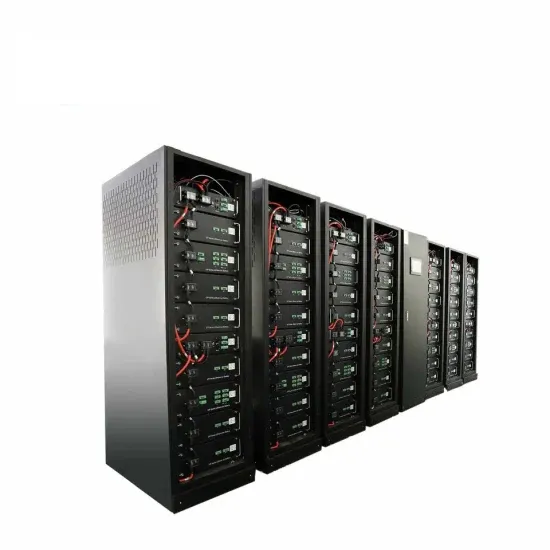
Microgrid projects to be built
Here is a rundown of eight microgrid projects operational and in focus this year. This grid connected government building improved their generator operations with the addition of storage. This demonstration home by SoCalGas is a first of its kind, using solar, storage, an electrolyzer, and the Generac ARC. . This page highlights some of the top microgrids around California and the US as of 2020. While the list is not meant to be exhaustive — as microgrids are being deployed with increasing frequency — it provides a sampling of microgrids around the country. It can connect and disconnect from the grid to. . Authorized by Section 40101(d) of the Bipartisan Infrastructure Law (BIL), the Grid Resilience State and Tribal Formula Grants program is designed to strengthen and modernize America's power grid against wildfires, extreme weather, and other natural disasters that are exacerbated by the climate. .
[PDF Version]
-
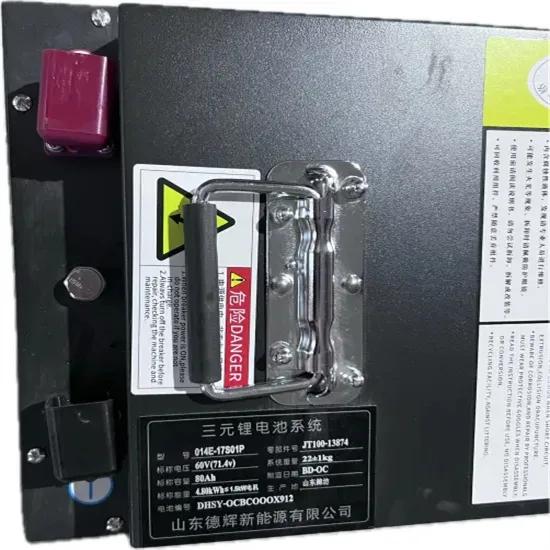
Information on microgrid projects under construction
This report delves into the state of the US microgrid market and Wood Mackenzie's outlook through 2029. We are currently tracking 4,870 microgrid projects that are operational, stalled, under construction or planned. . At Microgrid Knowledge, we write plenty of stories about the power resilience that on-site power delivers during cataclysmic events. And we also cover those which are built for every day, not just the rainy day. The number of successfully deployed microgrids will verify benefits and decrease implementation risks further expanding the market for microgrids. The Office of Electricity (OE) has a. . NLR has been involved in the modeling, development, testing, and deployment of microgrids since 2001. The following topics are covered: - Market size, share of installed capacity and. . Created by the Department of Energy's (DOE's) Office of Clean Energy Demonstrations (OCED), the ERA program prioritizes investments in solar energy, microgrids, battery energy storage systems, heat pumps, and hydroelectric power facilities in rural areas with populations of 10,000 or fewer. 5 times, bringing total to 32,470 MW by 2030.
[PDF Version]
-
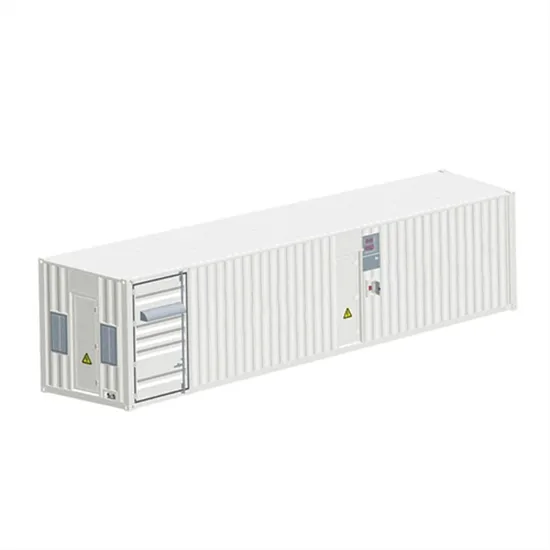
Large-scale microgrid projects
Here is a rundown of eight microgrid projects operational and in focus this year. . Scale designs, builds, operates, and finances on-site energy systems, which are tailored to meet the specific needs of organizations ranging from grocery stores to bus fleets to steel factories. With industry-leading expertise and a streamlined development process, Scale delivers optimal energy. . This demonstration home by SoCalGas is a first of its kind, using solar, storage, an electrolyzer, and the Generac ARC microgrid controller to convert solar energy to hydrogen. While the list is not meant to be exhaustive — as microgrids are being deployed with increasing frequency — it provides a sampling of microgrids around the country. A microgrid is a group of interconnected loads and distributed energy resources that acts as a single controllable entity with respect to the grid. Army are among those embracing microgrids. The idea that on-site power provides value year-around was driven home by Gil Bindewald, Principal. .
[PDF Version]
-
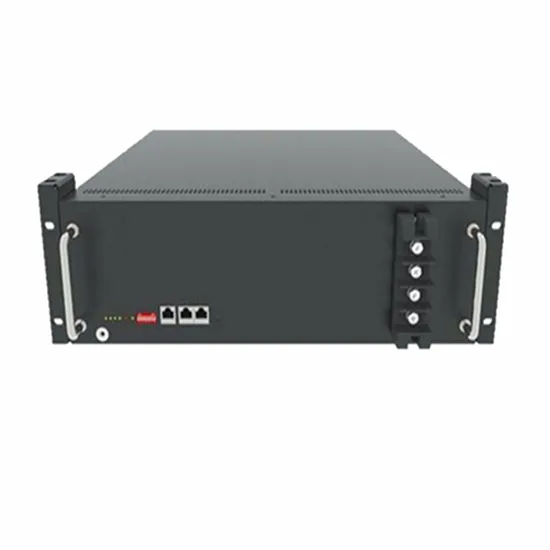
Microgrid lithium battery charge and discharge times
An optimization model is presented for managing lithium-ion batteries in microgrids, accounting for nonlinear energy losses during charging and discharging. A detailed analysis of these losses leads to proposed nonlinear expressions, which consider the battery's. . Lithium-ion batteries (LIBs) are currently the dominant grid-scale energy storage technology and leading candidate for deployment in microgrids. In this paper, a new control strategy is proposed, which adds the feedback compensation of the bus. . Microgrid systems are a beneficial alternative to decentralized power grids that can provide greener and high quality power with greater eficiency. The controller's fuzzy rules consider. .
[PDF Version]
-
Microgrid secondary coordination types
Specifically, it focuses on the secondary controller approaches (centralized, distributed, and decentralized control) and examines their primary strengths and weaknesses. The structure of secondary control is classified into three main categories including centralized SC (CSC) with a CI, distributed SC (DISC) generally with a low data rate CI and decentralized SC (DESC) with communication-free. . necessity and benefits of the GFM-GFL coordination in the secondary control of microgrids. The structure of this paper is as follows. The techniques are thoroughly discussed, deliberated, and compared to facilitate a better understanding. According to. . Thus by employing droop controls or impedance based controls desirable outcomes such as power sharing, non linear load sharing and harmonic reduction is possible thanks to coordinated operation of secondary and tertiary control layers with primary or local layer.
[PDF Version]
-
What are the performances of microgrid system
Advanced microgrids enable local power generation assets—including traditional generators, renewables, and storage—to keep the local grid running even when the larger grid experiences interruptions or, for remote areas, where there is no connection to the larger grid. . NLR has been involved in the modeling, development, testing, and deployment of microgrids since 2001. A microgrid is a group of interconnected loads and distributed energy resources that acts as a single controllable entity with respect to the grid. It can connect and disconnect from the grid to. . DC microgrids offer a promising alternative to traditional AC systems due to their compatibility with renewable energy sources, reduced conversion losses, and simplified integration of energy storage.
[PDF Version]
 MENU