
-
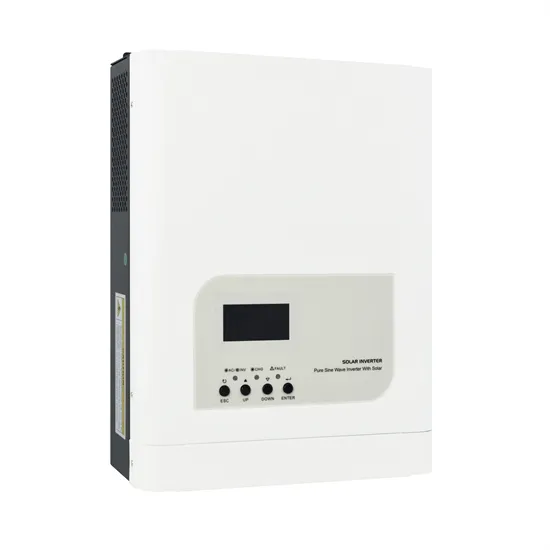
Small resistor in solar container lithium battery pack
The purpose is to charge the capacitors in the inverter to reduce surge when full battery power is connected to avoid large DC spark which can damage switches or breakers. Sometimes they are built into inverters. . My precharge circuit has a 25W 6 ohm resistor. I have 2x12V SOK 206Ah LFP in parallel feeding a Victron Multiplus II 12/3000/120x2 inverter/charger. If 200 ? resistor is used,it can balance the battery pack in less than 29. Are there any sizing. . High-power battery packs in automotive or industrial systems are often described as hierarchical in nature. This overview is effective. . Virtually all Li-ion protector circuits for one- and two-cell applications have protector FETs in the low (negative) side of the battery. The transients produced when the Li-ion protector opens during a momentary short or. . What is a lithium ion battery pack? The content covers cell format selection, series and parallel configuration design, battery management system implementation, and safety compliance requirements.
[PDF Version]
-
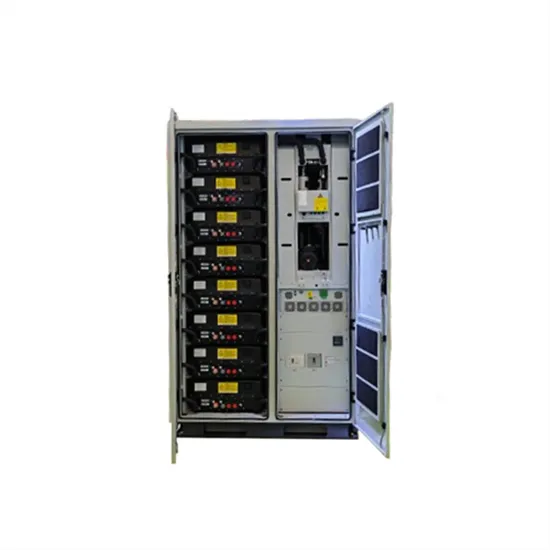
Small household solar energy storage cabinet lithium battery energy storage products
Consider lead-acid batteries for a cost-effective start, or lithium-ion systems for longer-lasting performance. . Discover home energy solutions from Briggs & Stratton. Home battery storage solutions. . Home battery storage has become a cornerstone of energy independence in 2025, with over 3. Here's what you need to know: Imagine this: a storm knocks out power in your neighborhood, but your lights stay on, your refrigerator keeps running, and. . The LZY solar battery storage cabinet is a tailor-made energy storage device for storing electricity generated through solar systems. Saltwater batteries offer an eco-friendly alternative, while flywheels provide quick charge capabilities.
[PDF Version]
-
Lithium battery photovoltaic energy storage small market value
The lithium-ion solar energy storage market size in 2023 was valued at USD 52. 9 billion and is estimated to grow at 15. 2% CAGR by 2034 owing to growing energy demand across isolated regions. This growth is fueled by the increasing adoption of electric vehicles, the large-scale integration of renewable energy, and rising demand for. . In this work we describe the development of cost and performance projections for utility-scale lithium-ion battery systems, with a focus on 4-hour duration systems. The projections are developed from an analysis of recent publications that include utility-scale storage costs. 8% market share, while cathode will lead the component segment with a 36. 1. . For solar-plus-storage—the pairing of solar photovoltaic (PV) and energy storage technologies—NLR researchers study and quantify the economic and grid impacts of distributed and utility-scale systems.
[PDF Version]
-
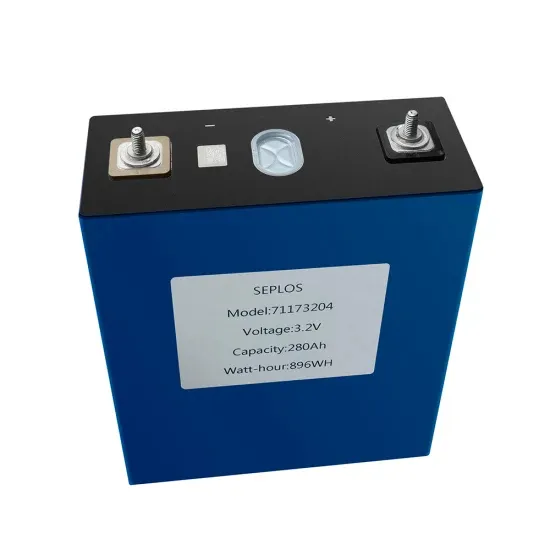
12v lead-acid battery and lithium battery energy storage
Lithium batteries are considered “better” than lead-acid batteries due to their significantly longer lifespan, higher energy density, faster charging capabilities, lighter weight, and better performance in extreme temperatures, although lead-acid batteries still have advantages. . Lithium batteries are considered “better” than lead-acid batteries due to their significantly longer lifespan, higher energy density, faster charging capabilities, lighter weight, and better performance in extreme temperatures, although lead-acid batteries still have advantages. . A quiet revolution is underway in energy storage: 12V lithium batteries are steadily replacing traditional 12V lead-acid batteries. What is driving this pivotal shift? The widespread adoption of the 12V electrical standard is key. As a universal power platform, 12V systems are the backbone for. . In this article, we'll compare two of the most common battery options paired with solar installations: lithium-ion and lead acid. Other than the different materials that compose each type of battery, their main difference comes in terms of cost and performance. Their design typically includes: Lithium Cobalt Oxide: Provides high energy output and is suitable for energy-dense applications.
[PDF Version]
-
What is the maximum watt inverter that can be used with a 12v solar container lithium battery
Yes, a single 12-volt battery can run a 1000-watt inverter, but the runtime depends on several factors such as the battery's capacity, the inverter's efficiency, and the load demand. While it is technically possible to run higher wattage inverters (up to 1500 watts), sustained use at high power strains the battery and electrical. . A 100Ah (amp-hour) battery delivers 100 amps for one hour, 10 amps for 10 hours, or 1 amp for 100 hours, depending on the load. The actual usable energy depends on: For a 12V 100Ah battery: That means you can run a 120W device for 10 hours (roughly), or a 1000W device for just over 1 hour— if the. . For instance, a small inverter (150–300 watts) might suffice for charging phones or laptops, while larger inverters (400 watts and above) could power more demanding appliances but may drain your battery quickly or overload the alternator. Finally, multiply run time hours by 95% to account for inverter losses. Introduction to Solar. . Compared to the smaller, budget-friendly options like BESTEK 300W or 500W models, this inverter's ability to handle larger loads, its efficiency (over 91%), and its smart LCD display for real-time data give it a big edge. Inverters are essential devices for converting DC power from batteries into AC power for household appliances, and. .
[PDF Version]
-
Calculation method of lithium battery energy storage benefits
A detailed electro-thermal model of a stationary lithium-ion battery system is developed and an evaluation of its energy efficiency is conducted. . This report describes development of an effort to assess Battery Energy Storage System (BESS) performance that the U. A battery energy storage system (BESS) is an electrochemical device that charges (or collects energy) from the grid or a power plant and then discharges that energy at a later time to. . puts 31. Abstract This paper presents performance data f for alternative emain constant a the values listed above for all scenarios. + ions into electronically conducting solids to store energy.
[PDF Version]
 MENU