
-
A reflection on lithium ion battery cathode
This review article provides a re ection on how fundamental studies have facilitated the discovery, optimization, and rational design of three major categories of oxide cathodes for lithium-ion batteries, and a personal perspective on the future of this important area. By utilizing a solid electrolyte instead of a liquid, these batteries offer the potential for enhanced safety, higher energy density, and longer life cycles.
[PDF Version]
-
Lithium ion vs metal battery
Here's a summary of the key differences between lithium-metal and lithium-ion batteries: Lithium-ion: Uses graphite as the anode, intercalating lithium ions within its structure. Lithium-metal batteries offer exceptional energy density, exceeding 500 Wh/kg, while lithium-ion batteries typically achieve around 100-270 Wh/kg. Although both use lithium, they differ significantly in construction, performance, applications, and safety. This article will explore these two types' key differences in detail.
[PDF Version]
-

Lithium ion battery market share
Asia-Pacific dominated the global lithium-ion battery market with the largest market share of 53% in 2025. 66 billion in 2025 and is projected to reach USD 306. Lithium-ion batteries are ideal rechargeable battery used in EVs, renewable energy storage. 85% during the forecast period. 8% market share, while cathode will lead the component segment with a 36.
[PDF Version]
-
Is it safe to charge the solar container lithium battery of Kigali Tools
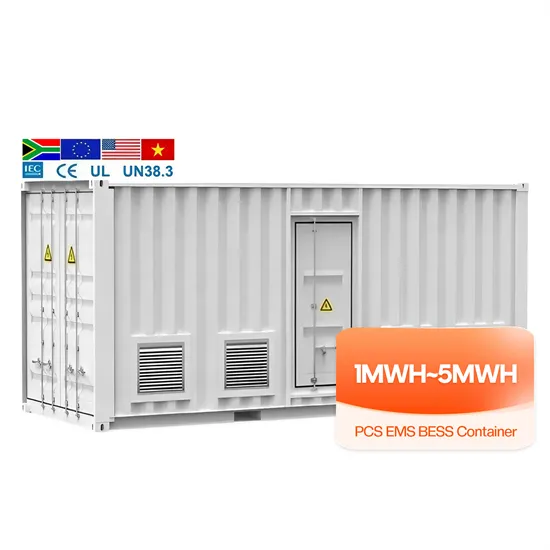
Before long-term storage (3-6 months or more), charge the battery to between 60-80% capacity. . The LithiumSafe™ Battery Box is designed for safely storing, charging and transporting lithium ion batteries. The most intensively tested battery fire containment solution on the market, engineered to fight all thermal runaway problems: • High temperature resistant up to 2552 ºF / 2552 ºC •. . Lithium batteries can present a considerable safety hazard if they are incorrectly handled or stored. Some common issues with lithium-ion batteries are fire hazards due to thermal runaway, deep discharge or mechanical deformation. What is a battery management system (BMS) for off-grid solar systems? In the domain of off-grid solar systems,a battery management system (BMS) stands out as an indispensable tool.
[PDF Version]
-
Is it safe to keep solar container lithium battery packs at home
The short answer is yes: you can store lithium-ion batteries in your home safely. Without appropriate storage, charging, and disposal methods, these batteries pose hazards such as: Let's explore how to mitigate those risks and protect your home. . While lithium-ion technology offers unprecedented efficiency and capacity, understanding its safety implications is paramount for homeowners. From advanced protection systems to proper installation protocols, multiple layers of safety measures exist to mitigate risks. Overcharging or Overdischarging: Exceeding recommended voltage limits or discharging. . Solar batteries, also known as solar energy storage systems or solar battery storage, are devices that store excess electricity generated by solar panels (photovoltaic or PV panels).
[PDF Version]
-
How many V battery packs can be assembled with 65 lithium batteries
Calculate voltage (V), capacity (Ah), energy (Wh), current (A), and power (W) for custom 18650 battery packs using clear series/parallel (S/P) logic. Series (S):. . Here's a useful battery pack calculator for calculating the parameters of battery packs, including lithium-ion batteries. 2V; we need three cells in series to make a 12. In the figure above, the connections are indicated. Because different batteries have different voltage and. . The minimum voltages listed are a rough estimate of the absolute minimum voltage you should ever discharge your cells to. Due to the non-linear discharge. . Understanding how to calculate a lithium-ion battery pack's capacity and runtime is essential for ensuring optimal performance and efficiency in devices and systems. The battery pack design involves assembling multiple cells to achieve the desired voltage and capacity. In an 18650 battery pack. .
[PDF Version]
 MENU