
-
Which solar container communication station in China and Europe has more flywheel energy storage
China connects Dinglun Flywheel Energy Storage Power Station to grid that will provide 30 MW of power with 120 high-speed flywheel units. . A grid-scale flywheel energy storage system is able to respond to grid operator control signal in seconds and able to absorb the power fluctuation for as long as 15 minutes. OverviewA flywheel-storage power system uses a for, (see ) and can be a comparatively small storage facility with a peak. . China has connected its first large-scale, grid-connected flywheel energy storage system to the power grid in Changzhi, Shanxi Province. (Representational image) iStock The US has some impressive. . Thanks to the unique advantages such as long life cycles, high power density, minimal environmental impact, and high power quality such as fast response and voltage stability, the flywheel/kinetic energy stora.
[PDF Version]
-
Solar energy storage target price
As of early 2026, the global average installed price for high quality off grid systems has stabilized between $350 and $550 per kilowatt hour. . ow of $999 per kilowatt-hour stored. In 2025, we are monitoring potential tariff 63% of Marketplace share nationwide. Because the Powerwall 3 includes an integrated inverter, Tesla also became t e second-most quoted inverter brand. With batteries increasingly being added to solar systems—the. . The National Renewable Energy Laboratory (NREL) publishes benchmark reports that disaggregate photovoltaic (PV) and energy storage (battery) system installation costs to inform SETO's R&D investment decisions. To put this in perspective, just four years ago in. . Source: S&P Global Commodity Insights. 30 GW Energy storage target by 2025 at a federal level.
[PDF Version]
-
Southeast Asia solar container energy storage system Distributor
This article shares four field-proven configurations—from compact 5 kW setups to 10 kW off-grid cabinets—highlighting design rationale, commissioning notes, and the business impact typical in the region. . Established in 2012 and operating from Shanghai, China, Shanghai LZY Energy Storage Co. With more than 10 years of experience in the solar container technology. . As Southeast Asia accelerates its shift toward renewable energy, photovoltaic power station containers are emerging as game-changers. Through years of dynamic development, PYTES has set up several manufacturing bases and sales centers domestically in Shanghai, Shandong, Jiangsu and overseas in Vietnam, USA and Netherlands, covering. . For commercial sites, adding energy storage systems (ESS) to solar PV isn't just a “green” upgrade—it's a practical way to stabilize operations, shave peak demand, back up critical loads, and reduce diesel consumption. But here's the kicker – Southeast Asia's. .
[PDF Version]
-
How much does 1w of East Asia solar energy storage cost
How much does the East Asia energy storage system cost As of recent data, the average cost of a BESS is approximately $400-$600 per kWh. Here's a simple breakdown: This estimation. Industry analysts predict: East Asia's energy. . Meta Description: Discover why photovoltaic energy storage costs are hitting $1 per watt, how regional variations impact pricing, and what 2025 projections reveal about grid parity. Explore cost breakdowns, real-world case studies, and emerging technologies reshaping renewable energy economics. The market is expected to grow from USD 402. 44 trillion in 2034, at a CAGR of 22. Rapid urbanization and the increasing demand for electricity in APAC countries are driving the need for. . This study explores the growth of solar power in seven key Asian countries, the potential for future growth and the avoided fossil fuel costs due to solar electricity generation between January and June 2022. In 2023, over 95% of new utility-scale solar PV and new onshore wind capacity had lower. .
[PDF Version]
-
Key equipment for wind and solar energy storage
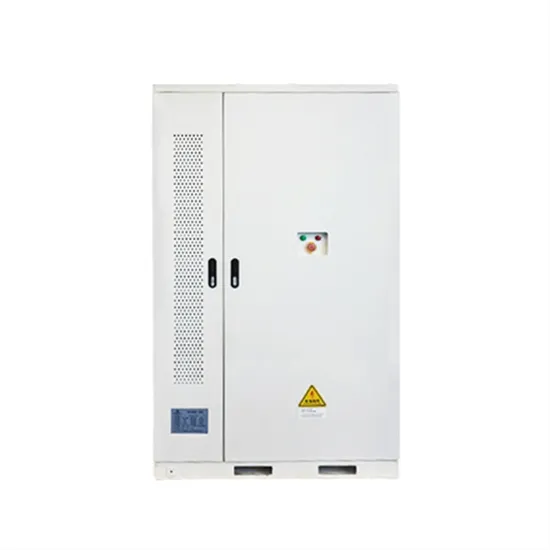
Wind and solar energy storage equipment refers to systems designed to store energy generated by wind turbines and solar panels for later use, ensuring reliability and efficiency. . As renewable energy adoption accelerates, efficient storage systems have become critical for stabilizing grids and maximizing clean power utilization. There are many sources of flexibility and grid services: energy storage is a particularly versatile one. Battery storage systems enhance wind energy reliability by managing energy discharge. . To effectively store wind energy, we can employ various advanced technologies, each suited for specific applications.
[PDF Version]
-
Energy storage power stations under construction in southeast asia
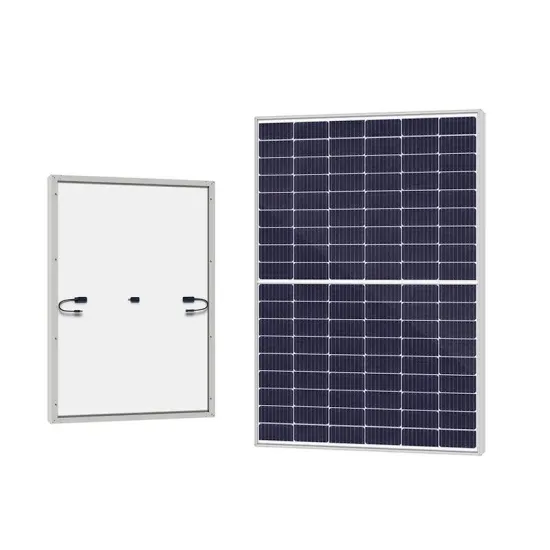
7 GW of pumped hydro storage is under construction, with the remaining 13. This expansion will diversify the region's renewable energy landscape, currently centered on the Philippines and Thailand. For commercial sites, adding energy storage systems (ESS) to solar PV isn't just a “green” upgrade—it's a practical way to stabilize operations, shave peak demand, back up. . t date, renewable energy buildout is set to acceler-ate. In a scenario where global warming is restricted to “well below 2°C” within the aims of the Paris Agreement, Southeast Asia countries must deploy around 21GW of renewable energy each year to 2030 and abou each an 18% share of generation by. . Pumped-storage hydropower, or simply pumped hydro, is set to play an increasing role in Southeast Asia's energy transition.
[PDF Version]
 MENU