
-
Large Energy Storage Liquid Flow Battery Price
As of 2024–2025, BESS costs vary significantly across different technologies, applications, and regions: Lithium-ion (NMC/LFP) utility-scale systems: $0. 35/kWh, depending on duration, cycle frequency, electricity prices, and financing costs. . Iron liquid flow batteries (IFBs) are gaining traction as a cost-effective solution for large-scale energy storage. Electrolyte Chemistry: Iron-chloride or iron-salt solutions are cheaper than vanadium. . Jasmine Young is a passionate writer and researcher specializing in battery technology, with a keen interest in its applications across various industries and its role in shaping a sustainable energy future. As prices evolve, the Levelized Cost of Storage (LCOS) presents a clear metric for assessing financial viability. LCOS calculates the average cost per kWh discharged throughout the. . Large energy storage batteries can range from $300 to $700 per kilowatt-hour, influenced by type, capacity, and installation needs.
[PDF Version]
-
Battery storage scale in georgia
As of late 2025, Georgia hosts approximately 146 MW of operational battery energy storage capacity, with another nearly 4,000 MW under construction, approved, or in development across its utility territories. com/stories/georgia-scales-up-battery-storage-to-support-energy-grid,76352 Support the show Thanks for. . Georgia Power has been progressively expanding its battery energy storage portfolio as part of its Integrated Resource Plan (IRP) updates, approved by the Georgia Public Service Commission (PSC) in 2023 and 2024. Find out why grid planning is shifting—and who's joining the charge.
[PDF Version]
-
Large Capacity Energy Storage Battery Cabinet
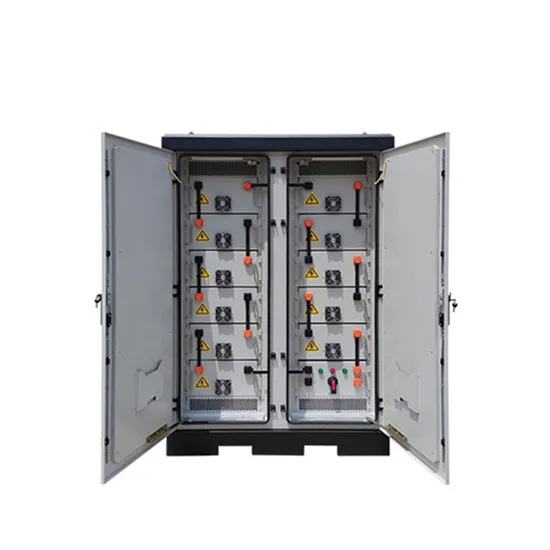
If you're looking for the 14 best UL-certified battery cabinets, I've found options that prioritize safety, durability, and efficient power storage. . CCCEI Modular Power Tool Organizer Wall Mount with Charging Station. Garage Drill Storage Shelf with Hooks, Heavy Duty Rack, Tool Battery Holder Built in 8 Outlet. Stack up to 8x SR5K-UL battery modules securely using the interlock hinges. The SRB2 Battery Cabinet is an outdoor-rated enclosure that can hold up to 2x SR5K-UL battery. . What Drives Energy Storage Cabinet Prices? Prices for new energy storage charging cabinets typically range from $8,000 to $45,000+ depending on three key factors: "The average price per kWh dropped 17% since 2022, making 2024 the best year for storage investments. " - Renewable Energy Trends Report. . The RUiXU 50kWh Lithium Battery Kits are high-performance, rack-mounted energy storage solutions designed for residential, commercial, and off-grid applications. Built with advanced LiFePO₄ technology, these systems provide efficient, safe, and scalable power storage while seamlessly integrating. . Most industrial off-grid solar power sytems, such as those used in the oil & gas patch and in traffic control systems, use a battery or multiple batteries that need a place to live, sheltered from the elements and kept dry and secure. Speak to a power expert to match up with your specific. .
[PDF Version]
-
Energy storage battery scale in the Philippines
Discover how battery energy storage systems (BESS) are reshaping energy reliability and renewable integration across the Philippines. The Philippines faces unique energy challenges: frequent power outages, high electricity costs, and growing demand from urbanization. Battery energy storage systems. . These bad boys store excess hydropower juice when the water's gushing like a firehose, then unleash it during peak hours or dry spells — like a squirrel hoarding nuts, but for megawatts. It's not just cool tech wizardry; it's a game-changer for the Philippines' energy scene. They specifically drew parallels to Vietnam's experience where renewable growth. . We will also introduce you to fractionalized battery solutions by NexVolt – an inexpensive & innovative way you can install battery storage for your business in Philippines.
[PDF Version]
-
Home battery storage for sale in Japan
The answer lies in the booming Japanese residential energy storage field, where 1 in 5 solar-powered homes now use battery systems – a 300% jump since 2020 [3]. Looking forward, IMARC Group expects the market to reach USD 2,783. 6 Million by 2034, exhibiting a growth rate (CAGR) of 18. The market is driven by high residential electricity prices and. . The Japanese residential battery storage market is characterized by a highly competitive environment dominated by a mix of established multinational corporations and innovative local startups. Industry giants such as Panasonic, Sony, and Mitsubishi Electric leverage their extensive R&D. . Home lithium-ion battery systems generated USD 278. Systems rated between 3 kW and 5 kW currently generate the most revenue, but smaller units under 3 kW are projected to grow faster, reflecting. . PowerX is revolutionizing battery storage with its innovative Battery Tanker project, which transports gigawatt hours of clean electricity across oceans, effectively creating a global power grid. Most BESSs in Japan are currently co-located with renewable power installations, but the country is increasingly looking at installing standalone s rgy supply and avoiding grid constraints. We look at the changes being implemented and what they me. .
[PDF Version]
-
Lithium battery photovoltaic energy storage small market value
The lithium-ion solar energy storage market size in 2023 was valued at USD 52. 9 billion and is estimated to grow at 15. 2% CAGR by 2034 owing to growing energy demand across isolated regions. This growth is fueled by the increasing adoption of electric vehicles, the large-scale integration of renewable energy, and rising demand for. . In this work we describe the development of cost and performance projections for utility-scale lithium-ion battery systems, with a focus on 4-hour duration systems. The projections are developed from an analysis of recent publications that include utility-scale storage costs. 8% market share, while cathode will lead the component segment with a 36. 1. . For solar-plus-storage—the pairing of solar photovoltaic (PV) and energy storage technologies—NLR researchers study and quantify the economic and grid impacts of distributed and utility-scale systems.
[PDF Version]
 MENU