
-
How to choose photovoltaic panels and solar panels
Expert guide on how to choose solar panels: types, efficiency, power ratings, costs. Calculate your optimal solar installation with PVGIS tools. With diverse technologies available and constantly evolving markets, this selection requires a methodical approach based on your specific needs. By the end of this guide, you'll be equipped with the knowledge to make a confident choice when buying. .
[PDF Version]
-
How many watts of solar panels are needed to generate 20 degrees of electricity
On average, 15-20 solar panels of 400 W are needed to power a house. This can vary depending on your solar panels' wattage rating, solar panels' efficiency, climate in your area, your total household electricity consumption, and how much of that you want to offset to your solar panels. . How many watts of solar energy can generate 20 degrees of electricity per day? To determine the amount of solar energy required to generate 20 degrees of electricity per day, one must first recognize that the term “degrees” may refer to either electrical output or the conversion of solar energy to. . The fundamental formula for calculating solar panel wattage is: Wattage = Voltage × Current When applied to solar panels, this can be expressed as: Solar Panel Wattage = Vmp × Imp Where: Vmp represents the voltage at maximum power point, indicating the optimal voltage level at which the panel. . This solar panel wattage calculator allows you to calculate the recommended solar panel wattage according to the energy consumption of your household appliances. If you want to know more about solar panel sizes and wattage calculations, feel free to explore our fun and helpful solar panel. . Now, the amount of electricity in terms of kWh any solar panel will produce depends on only these two factors: Solar Panel Size (Wattage). Losses come from inverter efficiency, wiring, temperature, and dirt.
[PDF Version]
-
How many watts are there for 30 solar panels 445w
Free online solar panel output calculator — estimate daily, monthly, and yearly kWh energy production based on panel wattage, number of panels, sun hours, and system efficiency. Losses come from inverter efficiency, wiring, temperature, and dirt. Increasing panel count or choosing higher wattage. . How many watts is a 400W solar panel? The number in the panel's name is its rated wattage. A 400W solar panel can produce up to 400 watts in full sun. Think of it like a car's fuel rating it shows potential, not. . The fundamental formula for calculating solar panel wattage is: Wattage = Voltage × Current When applied to solar panels, this can be expressed as: Solar Panel Wattage = Vmp × Imp Where: Vmp represents the voltage at maximum power point, indicating the optimal voltage level at which the panel. . Definition: This calculator determines the power output of a solar panel based on its voltage and current. It's easy to use, requires just a few inputs, and provides accurate projections that can help you make informed decisions about your energy needs and return on investment (ROI).
[PDF Version]
-
How many solar panels are needed for 350mw solar power generation
On average, it takes around 2,857 panels, each rated at 350 watts, to achieve one megawatt of power. . Location Impact is Massive: The same home using 1,000 kWh monthly could need just 16 panels in sunny Arizona but 22 panels in Massachusetts due to solar production ratios varying from 1. Higher wattage panels generate more power per. . Determine optimal solar panel size for your energy needs and available roof space. Enter your monthly electricity consumption and location details to calculate required solar panel system size. System Size (kW) = (Monthly kWh × 12) / (365 × Sun Hours × (1 - Losses/100)) This formula has been. . Size a PV system, estimate energy output, or find panel count from your usage, sun-hours, and performance ratio — with steps and units. The mode changes what you provide (e. You. . The formula to calculate the number of solar panels needed is: [ text {Number of Solar Panels} = frac {text {Total Solar Panel Area (m²)}} {text {Solar Panel Area (m²)}} ] This calculator helps determine the total area and number of solar panels needed to power a house based on average daily. . A standard solar panel produces about 350–400 watts.
[PDF Version]
-
Production of home solar photovoltaic panels
This comprehensive guide will walk you through everything you need to know about solar panel energy production, from basic calculations to real-world performance data. . Modern Solar Panel Output: In 2025, standard residential solar panels produce 390-500 watts, with high-efficiency models exceeding 500 watts. A typical 400-watt panel generates 1,500-2,500 kWh annually depending on location, with systems in sunny regions like Arizona producing up to 1,022 kWh per. . Caution: Photovoltaic system performance predictions calculated by PVWatts ® include many inherent assumptions and uncertainties and do not reflect variations between PV technologies nor site-specific characteristics except as represented by PVWatts ® inputs. While some concentrating solar-thermal manufacturing exists, most solar manufacturing in the United States is related to photovoltaic (PV) systems. Those systems are comprised of PV modules. . A photovoltaic (PV) cell, commonly called a solar cell, is a nonmechanical device that converts sunlight directly into electricity. Sunlight is composed of photons, or particles of solar energy.
[PDF Version]
-
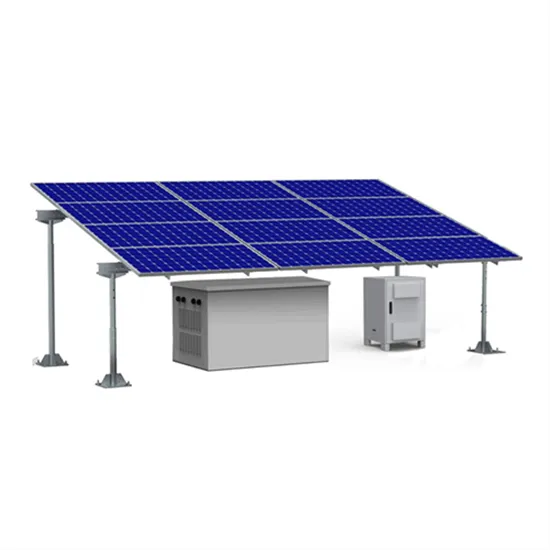
How to choose a high-efficiency off-grid solar energy storage cabinet
When looking for the best off-grid energy storage systems for your home, you'll find several top contenders. The Tesla Powerwall, LG Chem RESU, and Sonnen Eco are popular choices, offering high capacity and efficient performance. Enphase Encharge and Generac PWRcell provide modular designs for easy. . Before purchasing any equipment required for a solar battery (hybrid) or off-grid power system, it is very important to understand the basics of designing and sizing energy storage systems. Living off the grid doesn't mean you have to sacrifice modern comforts or reliable. . With the right knowledge, you can select a system that delivers dependable energy year-round — whether you're powering a cabin, tiny house, or full-time off-grid property. This guide explains what matters when choosing solar panels, how to match them to your lifestyle, and why EcoFlow solutions. .
[PDF Version]
 MENU