
-
One meter high photovoltaic panel
The cost of a 1 meter long solar panel varies based on a multitude of factors, including 1. . Solar panels have become a cornerstone of renewable energy, but many wonder: How much power can a single square meter of solar panels actually produce? Let's break down the science behind photovoltaic efficiency. Under optimal conditions (5 peak sun hours): At noon under direct sunlight: *Note: 1m². . Nowadays, solar energy adoption is accelerating, and understanding the solar panel cost per square meter is quite essential for anyone thinking about solar energy installation. Whether installed at home or in a business, or in huge installations, understanding the price per energy generated is. . Since 2020, the race to develop the world's most powerful solar panel has escalated rapidly, driven by breakthroughs in cell architecture, the transition to larger N-Type cell formats, and multi-busbar and gapless interconnect designs. What began with Trina Solar 's 600W module debut in 2020. . Solar panel costs range from $16,600 to $20,500 for the average 6.
[PDF Version]
-
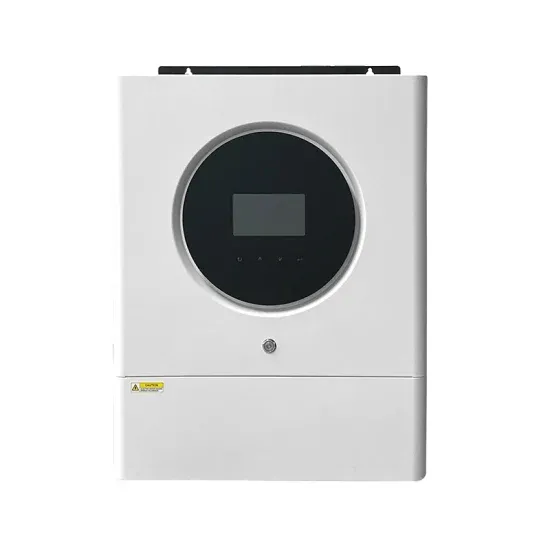
Solar Photovoltaic Panel Battery Inverter
Solar inverters designed for battery storage convert direct current (DC) electricity generated by solar panels into alternating current (AC) electricity. . Its pure sine wave inverter delivers a steady 600W and peaks at 1200W, handling everything from small appliances to sensitive electronics without hiccups. The 92% efficiency really makes a difference, cutting down energy loss and giving me more usable power from the sun's rays. These systems vary in power capacity, battery technology, and smart features like MPPT charge controllers, WiFi. . How a solar inverter works: DC power from solar panels is converted to AC power by the solar inverter, which can be used by home appliances or fed into the electricity grid. While solar inverters are the most common type of inverter used for residential solar, they are just one of several inverter. . Discover the EG4 ChargeVerter GC, a versatile 48V 100 amp charger designed for efficient and reliable battery charging from various power sources.
[PDF Version]
-
Does photovoltaic panel welding technology require high technology
In photovoltaic (PV) panel construction, welding isn't just about joining metals; it's about creating molecular handshakes that withstand decades of UV radiation and thermal cycling. Modern PV factories use laser welding robots achieving 3mm/ms travel speed – that's faster than a. . At present, the mainstream high-density solar panel technologies in the market include overlap welding, round ribbon welding, triangular ribbon welding. Let's analyze the characteristics of each technology. Overlap welding: a revolutionary high-efficiency solar panel encapsulation technology based. . Solar panels rely on welding for efficient energy conversion and structural integrity, as well as enhanced durability, cost-effectiveness, and reduced energy loss during production. Welding serves as a critical connection method for electrical components, ensuring a seamless flow of electricity. This evolution is not just a shift in. .
[PDF Version]
-
Solar power generation photovoltaic panel enthusiasts
On this page you'll find resources to learn what solar energy is; how you, your business, or your community can go solar; and find resources for every step of the way. . Solar photovoltaic (PV) power generation is the process of converting energy from the sun into electricity using solar panels. Solar panels, also called PV panels, are combined into arrays in a PV system. PV systems can also be installed in grid-connected or off-grid (stand-alone) configurations. Solar. . Efficiency Breakthrough in 2025: Modern solar panels now achieve 21-24% efficiency in commercial applications, with laboratory demonstrations exceeding 26%. has some of the richest solar resources in the world. Solar technologies can harness this energy for a variety of. . Electricity generation by the U. electric power sector totaled about 4,260 billion kilowatthours (BkWh) in 2025. In our latest Short-Term Energy Outlook (STEO), we expect U. 6% in 2027, when it reaches an annual total of 4,423 BkWh.
[PDF Version]
-
Solar photovoltaic panel light efficiency
Modern panels reach 18–23% efficiency. That means they convert about one-fifth of sunlight into usable power. But efficiency is only part of the story. Real-world performance changes with temperature, shading, tilt angle, and even the quality of the inverter or battery. The efficiency of the solar cells used in a photovoltaic system, in combination with latitude and climate, determines the annual energy output of the. . The conversion efficiency of a photovoltaic (PV) cell, or solar cell, is the percentage of the solar energy shining on a PV device that is converted into usable electricity. Improving this conversion efficiency is a key goal of research and helps make PV technologies cost-competitive with. . This guide breaks down everything you need to know about solar panel efficiency, including how it's calculated, what the top-performing panels are, and why it matters for California homeowners navigating the post–NEM 3. Progress has slowed in recent times, but having reached a top efficiency rating of 25%, domestic panels are effective enough to make the most of any space you have on your roof. This is done by capturing the electrical current generated when sunshine interacts with silicon or thin film cells inside a solar panel.
[PDF Version]
-
445w photovoltaic panel output voltage
2V for standard residential panels. This is crucial for system design as it determines the maximum voltage your components must withstand. The voltage at which the panel produces maximum power, typically ranging from 18V to 36V. . Solar panel output voltage typically ranges from 5-40 volts for individual panels, with system voltages reaching up to 1500V for large-scale installations. Example: A nominal 12V voltage solar panel has an. . REC Solar's Alpha REC445AA 72 solar panel is a revolutionary solar panel achieving incredible levels of efficiency, power, and strength. Their attractiveness is easy to understand: generating almost twice as much power as. . Subject to a manufacturing tolerance of +/- 5 %. 5 and a cell temperature of 25°C. Our 445-watt 24V solar PV module includes an IP 65 back side junction. .
[PDF Version]
 MENU