
-
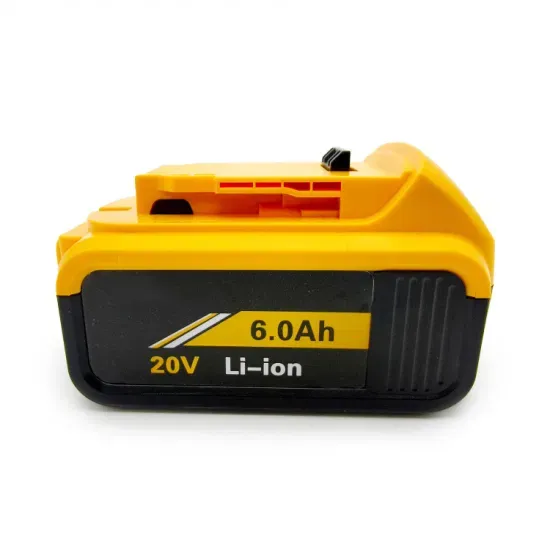
Solar container lithium battery Energy Storage 2025
In this work we describe the development of cost and performance projections for utility-scale lithium-ion battery systems, with a focus on 4-hour duration systems. The projections are developed from an analysis of recent publications that include utility-scale storage costs. The suite of. . Battery Storage Costs Have Reached Economic Viability Across All Market Segments: With lithium-ion battery pack prices falling to a record low of $115 per kWh in 2024—an 82% decline over the past decade—energy storage has crossed the threshold of economic competitiveness. Utility-scale systems now. . According to China Report Hall's *2025-2030 China Energy Storage Industry Market Analysis and Prospect Forecast Report*, the past two years have seen structural cost declines in battery production. Phosphate iron lithium battery prices per watt-hour have decreased by approximately 45% since early. . According to data made available by Wood Mackenzie's Q1 2025 Energy Storage Report, the following is the range of price for PV energy storage containers in the market: Battery Type: LFP (Lithium Iron Phosphate) batteries are expected to cost 30% less than NMC (Nickel Manganese Cobalt) batteries by. . Developers and power plant owners plan to significantly increase utility-scale battery storage capacity in the United States over the next three years, reaching 30. 0 gigawatts (GW) by the end of 2025, based on our.
[PDF Version]
-
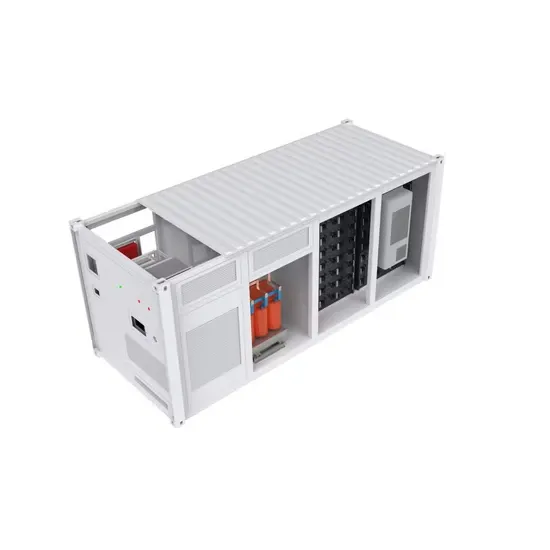
Battery solar energy storage cabinet system for solar telecom integrated cabinets in 2025
Featuring lithium-ion batteries, integrated thermal management, and smart BMS technology, these cabinets are perfect for grid-tied, off-grid, and microgrid applications. Explore reliable, and IEC-compliant energy storage systems designed for renewable integration, peak shaving, and backup power. Continuous power availability ensures network uptime and service quality in remote locations, even during grid failures or low sunlight. By integrating solar modules. . The Solar Power and Battery Cabinet is an all-in-one outdoor energy solution that combines solar charging, energy storage, and power distribution in a weatherproof enclosure. Designed for remote locations, it integrates solar controllers, inverters, and lithium battery packs to ensure stable and. . Enter the PV storage cabinet: a fully integrated enclosure that brings together lithium battery packs, hybrid inverters, energy management protocols, and safety systems into one scalable solution. As a professional manufacturer in China, produces both. .
[PDF Version]
-
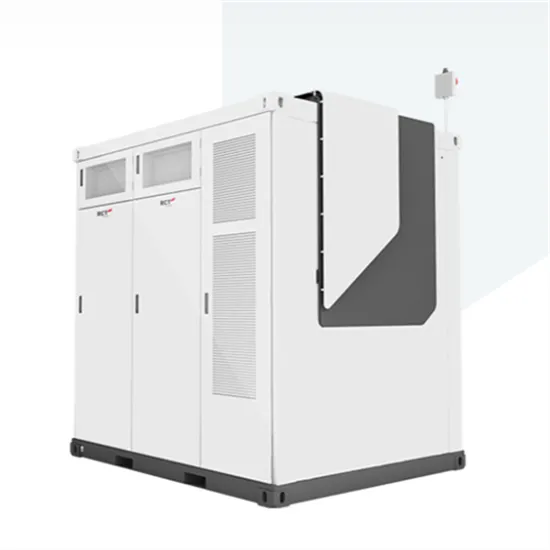
New World solar container lithium battery Energy Storage
The container battery utilizes 700-Ah lithium iron phosphate (LiFePO4) cells in a liquid-cooled 1,500 to 2,000-volt configuration. Despite its massive 8-MWh capacity, the system can fit into half a standard shipping container, weighing approximately 55 tons (50 tonnes). Taken from Envision Energy's website, this is a possible design configuration of its 8-MWh, 20-ft. . In this rapidly evolving landscape, Battery Energy Storage Systems (BESS) have emerged as a pivotal technology, offering a reliable solution for storing energy and ensuring its availability when needed. This guide will provide in-depth insights into containerized BESS, exploring their components. . We combine high energy density batteries, power conversion and control systems in an upgraded shipping container package. Lithium batteries are CATL brand, whose LFP chemistry packs 1 MWh of energyinto a battery volume of 2. 25MWh per 20-foot container and zero degradation over the first five years, the company claimed.
[PDF Version]
-
China International New Energy Storage
As reported by Energy Storage News, China plans on building an installed base of large-scale energy storage — primarily lithium-ion battery energy storage systems — to reach 180 gigawatts by the end of 2027, driving $35. 2 billion in direct project investment. . China's National Energy Administration (NEA) has released the China New Energy Storage Development Report 2025, marking the first official and comprehensive government report dedicated to the country's rapidly advancing new energy storage (NES) sector. 8 gigawatts, 40% of the global total. If China reaches its goal, the country would. . CNESA says China's non-pumped storage technologies hit 144. China's cumulative power-sector energy storage capacity reached 213. 3 GW by the end of 2025, up 54% year on year, according to data from the China Energy Storage Alliance (CNESA). Pumped hydro accounted. . China's new energy storage capacity has exceeded 100 million kilowatts, marking a major milestone in the nation's transition toward a new-type energy system and consolidating its global lead in renewable energy development, said officials at an energy storage sub-forum on Nov 5. It is currently the largest single electrochemical storage facility in the country (Image: Ma Mingyan / China News Service / Alamy) In February 2025, China shelved a requirement that new domestic. .
[PDF Version]
-
Nanya EK launches new solar container energy storage system
It integrates solar PV, battery storage, backup diesel, and telecom power distribution in one standard container. Strong storage: Up to 50 kWh capacity . . In a joint statement posted in May, the NDRC and the NEA established their intentions to realize full the market-oriented development of new (non-hydro) energy. A critical part of the comprehensive power market reform, energy storage is an important tool to ensure the safe supply of energy and. . As global electricity demand grows 3. 4% annually (IEA 2023), the Nanya New Energy Storage Base emerges as a game-changer in renewable energy integration. New modular designs enable capacity expansion through simple container additions at just $210/kWh for incremental capacity. The batter ve the equipment such as automated QCs and. . Meta Description: Discover how Nanya portable energy storage customization meets diverse power needs across industries.
[PDF Version]
-
New Energy Storage Solar On-site Energy Prices
The analysis, based on recent auction results from Saudi Arabia, India, and Italy, along with expert interviews conducted in October 2025, represents real-world project costs across global markets including Australia, Mexico, Romania, Croatia, and Turkey. This report is available at no cost from NREL at www. Department of Energy (DOE), operated under Contract No. . Battery energy storage costs have reached a historic turning point, with new research from clean energy think tank Ember revealing that storing electricity now costs just $65 per megawatt-hour (MWh) in global markets outside China and the United States. NLR's PV cost benchmarking work uses a bottom-up. . New report from EnergySage finds consumers are more willing than ever to add storage to their solar systems. In the first half of 2024, more than a third of homeowners who bought solar panels through Energy Sage, also purchased a battery according to the company's 19th semiannual “Solar & Storage. . Lawrence Berkeley National Laboratory compiled and synthesized empirical data on the U. The focus is on ground-mounted systems larger than 5M AC, including photovoltaic (PV) standalone and PV+battery hybrid projects (smaller projects are covered in Berkeley Lab's. .
[PDF Version]
 MENU