
-
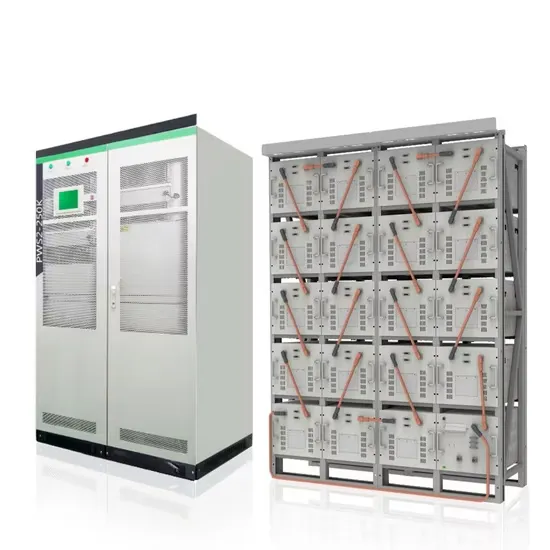
Lithium-ion battery technology canada
In 2022, Canada made significant progress in the global lithium-ion battery supply chain, climbing from fifth to the impressive second position in BloombergNEF's annual report. This achievement is attributed to the country's abundant reserves of raw materials and active mining. . On October 3, 2025, the Honourable Tim Hodgson, Minister of Energy and Natural Resources, announced an investment of over $22 million under the Energy Innovation Program (EIP) in support of eight projects to help accelerate battery innovation and production capacity across Canada. EIP - Battery. . As demand — and competition — for critical minerals used in clean technologies heats up around the world, mining startups are flocking to the heart of Canada's oil and gas industry to tap into a key battery metal: lithium. The audio version of this article is generated by AI-based technology. As the world transitions towards a greener future, the demand for lithium-ion batteries is skyrocketing, making the manufacturing industry surrounding them a. .
[PDF Version]
-
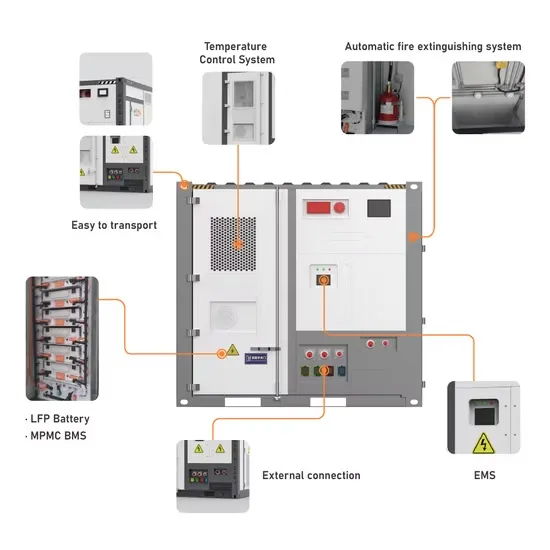
Smart Energy Storage Cabinet Used in Battery Swapping Stations Canada
These cabinets are designed to store and manage lithium-ion batteries used in electric vehicles, allowing for quick and efficient battery swapping as an alternative to traditional charging methods. Relying on intelligent battery. . PSN Energy lithium battery swapping cabinet is a specialized piece of equipment used in battery swapping stations for electric vehicles. Reliable Operation: Operates in a wide temperature range (-10°C to 50°C). Advanced Communication: Supports 4G, WIFI, and RJ45 for seamless connectivity.
[PDF Version]
-
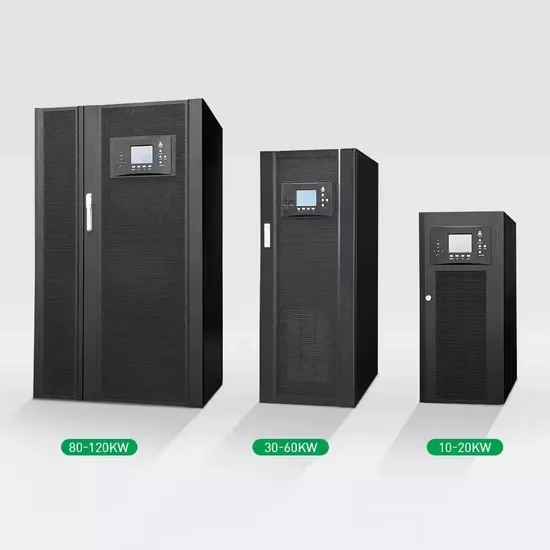
Planning and construction of battery cells for telecommunication base stations in Canada
This work studies the optimization of battery resource configurations to cope with the duration uncertainty of base station interruption. This article explores how these systems work, their typical architecture, the components involved, and what design factors engineers and procurement teams. . Data Center UPS reserve time is typically much lower: 10 to 20 minutes to allow generator start or safe shutdown. Reprinted with permission from FM Global. Source: Research Technical Report Development of Sprinkler Protection Guidance for Lithium Ion Based Energy Storage Systems, © 2019 FM Global. . A typical communication base station combines a cabinet and a pole. Meanwhile, the pole serves as a mounting point for antennas, Remote Radio Units (RRUs), and. . 5G can help realize the future of Internet of Things (IoT), connected cars and smart cities through higher speeds (up to 10 Gbps), better coverage (capacity expansion by a factor of 1,000) and improved reliability (by leveraging ultra-wide bandwidth and throughput). Their reliability and availability heavily depend on the electrical power supply.
[PDF Version]
-
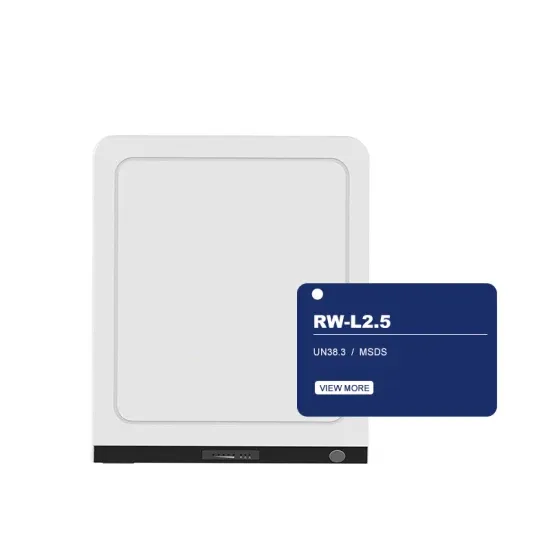
Battery cabinets for remote areas in Canada with IP65 rating
Explore AZE's premium NEMA-rated and weatherproof enclosures designed for telecom, industrial electrical, and energy storage applications. Modular design with high energy density. Adaptability to ambient temperature range of -30°C to +55°C. Resistance up to C5 corrosion level. . CONSNANT IP65 Outdoor Integrated Power Supply Cabinets: Tailor-made for South American Grid Reliability Internal power equipment configuration: CNI330-15KVA industrial-grade UPS with built-in 70A nickel-cadmium battery charger, 1000W air conditioner. Explore. . A high protection class battery cabinet that can be applied as standalone or extension of outdoor power system. The system integrates temperature control and ventilation system, heater (option) and reserved space for batteries.
[PDF Version]
-
Havana flow battery technology
Unlike conventional batteries, Havana systems employ adaptive charge controllers - think of them as "smart traffic lights" for energy flow. Key features include: "The true innovation lies in balancing high-density storage with thermal safety - something many competitors still. . Flow batteries are emerging as a transformative technology for large-scale energy storage, offering scalability and long-duration storage to address the intermittency of renewable energy sources like solar and wind. Advancements in membrane technology, particularly the development of sulfonated. . Next-level energy storage systems are beginning to supplement the familiar lithium-ion battery arrays, providing more space to store wind and solar energy for longer periods of time, and consequently making less room for fossil energy in the nation's power generation profile. If you haven't heard, the energy storage market is booming. Residential, commercial and grid-scale. . A flow battery is a type of rechargeable battery that stores energy in liquid electrolytes, distinguishing itself from conventional batteries, which store energy in solid materials. Even so, those aforementioned battery types have deficiencies.
[PDF Version]
-
Photovoltaic container battery limitation technology
The defossilization of the open-sea ship traffic can most definitely only be achieved with alternative energy carriers. Besides synthetic fuels, battery-electric propulsion is a much-discussed measure, especi.
[PDF Version]
FAQS about Photovoltaic container battery limitation technology
Are photobatteries a viable alternative to grid-scale energy storage?
We also highlight prospective use cases of photobatteries; for example, there are substantial technological challenges that need to be addressed before grid-scale energy storage becomes viable, but in the short term, they might be attractive for small off-grid devices.
Are solar energy containers a viable energy solution?
Solar energy containers offer a reliable and sustainable energy solution with numerous advantages. Despite initial cost considerations and power limitations, their benefits outweigh the challenges. As technology continues to advance and adoption expands globally, the future of solar containers looks promising.
Is vessel size a limitation for battery applications?
Forty-five vessels with capacities ranging from 354 to 24,004 twenty-foot-equivalent containers are under investigation. The aim is to determine whether vessel size poses a limitation for battery applications. Dynamic operating profiles with passage lengths ranging from 500 to 20,000 km are assessed.
Can photo-enhanced battery systems improve battery performance?
Introducing a window also leads to a drop in battery performance. 62 Alternatively, photo-enhanced systems might be interesting to make new sustainable battery technologies relying on multivalent-ion systems more attractive for renewable energy storage.
 MENU