
-

Brunei s construction of a communication base station inverter grid connection cost
How much does a base station upgrade cost?The upgrade costs include the base station equipment upgrade and platform construction (detailed cost breakdown in Table S8), totaling an estimated cost of 195. 450 billion renminbi (RMB) to upgrade all communication base stations nationwide (detailed. . What is the cost of building and maintaining a communication base station Building and maintaining a communication base station is a complex process that involves various costs. How much does a solar inverter cost? String inverter systems cost less up front, but systems using microinverters last. . How much electricity does Brunei produce? In 2010,electricity generation in Brunei reached 3,862,000,000 kWh,in which 99% of it was generated from natural gas sources and the remaining 1% was from oil sources. ^"Department of Electrical Services,Brunei Darussalam". Data collected since its establishment has shown that the country has the potential to harness significant amount of electricity from solar energy. While maximizing power transfer remains a top priority, utility grid stability is. .
[PDF Version]
-
Which communication base station inverter is better in Haiti
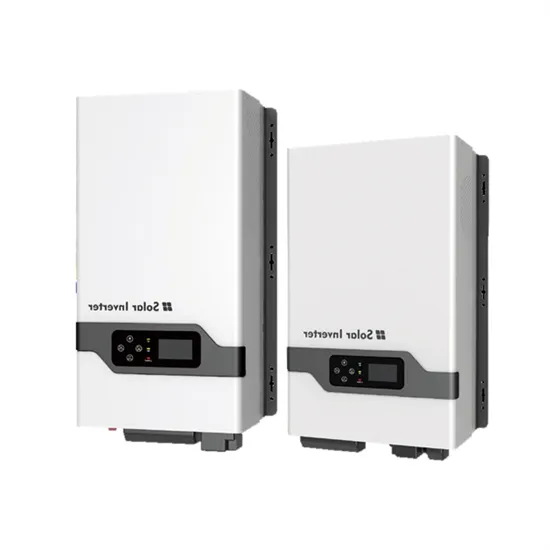
Choose an inverter designed for straightforward installation. . Base Transceiver Station (BTS) shelters, especially those in remote or off-grid locations, demand consistent, uninterrupted energy. Power fluctuations or outages directly impact network uptime, leading to service disruptions. The RD Series is powerful, easy-to-use, and best of all, cost effective. This research paper presents the results of the implementation of solar hybrid power supply system at telecommunication base tower to reduce. . Proven value for of-grid, backup power and self-consumption Conext™ SW inverter/charger The Conext SW is a pure sine wave inverter that provides reliable power after a simple installation. For example, an entry-level 5kW inverter can start at as little as $650, while a premium quality 10kW inverter with a 10-year warranty may cost up to $. Solar energy adoption has surged by 28% since 2020, creating new opportunities for hybrid power solutions.
[PDF Version]
-
Fiber Optic Communication Base Station Inverter
Designed to operate at speeds of 10/100/1000 Mbps, this inverter provides seamless transition between RJ45 Ethernet connections and fiber optic connections in both multi-mode and single-mode configurations. This flexibility makes it suitable for a wide range of applications in. . Solar and wind farms use fiber optic inverters to convert DC power from panels or turbines into grid-compatible AC power with minimal energy loss. These inverters are essential for maintaining signal integrity, boosting transmission efficiency, and supporting high-speed data. . Fiber Optic Inverter by Application (Aerospace, Industrial, Consumer Electronics, Others), by Types (Below 4µm, 4-6µm, Above 6µm), by North America (United States, Canada, Mexico), by South America (Brazil, Argentina, Rest of South America), by Europe (United Kingdom, Germany, France, Italy, Spain. . Communication Base Station Inverter Dec 14,  &#; Power conversion and adaptation: The inverter converts DC power (such as batteries or solar panels) into AC power to adapt to the power needs of various communication equipment. This is critical to The Future of Hybrid Inverters in 5G. .
[PDF Version]
-
How far can the communication base station inverter be connected to the grid
In most applications, powerline communication (PLC) can work reliably for distances of up to 250 feet. . Thus, unlike the off-grid systems, you will connect the inverter directly to the grid. However, if the PV system and the IQ Gateway/Envoy are isolated from the site load, the What is a vehicle mounted base station? Simply put, a vehicle mounted base station is the installation of. . How do solar inverters connect to the grid? Solar inverters connect to the grid through a process known as grid synchronization, which involves aligning the inverter's output voltage, frequency, and phase with the grid's parameters. Once synchronization is achieved, the inverter closes its output. . Grid-connected inverter control techniques Although the main function of the grid-connected inverter (GCI) in a PV system is to ensure an efficient DC-AC energy conversion, it must also allow other functions useful to limit the effects of the unpredictable and stochastic nature of the PV source.
[PDF Version]
-
Millimeter wave communication base station inverter technology
In this paper, the relevant millimeter-wave enabling technologies are reviewed: they include the recent developments on the system architectures of active beamforming arrays, beamforming integrated circuits, antennas for base stations and user terminals, system measurement. . In this paper, the relevant millimeter-wave enabling technologies are reviewed: they include the recent developments on the system architectures of active beamforming arrays, beamforming integrated circuits, antennas for base stations and user terminals, system measurement. . Here, we propose a large-scale 2-bit millimeter-wave programmable metasurface to build an integrated smart base station framework for 6G communications. The meta-array is composed of 30 × 30 meta-elements, each with two embedded positive-intrinsic-negative (PIN) diodes. A dish-cone antenna is. . He is currently working on the research and development of radio technology for 5G systems in both cellular and mmwave frequency bands. This paper introduces our efforts in developing A-RoF. . NEC developed technology to stabilize communication quality during high-speed movement by utilizing millimeter waves capable of high-capacity communication, and conducted a joint demonstration experiment with NTT and NTT DOCOMO.
[PDF Version]
-
How does the inverter work for a communication base station
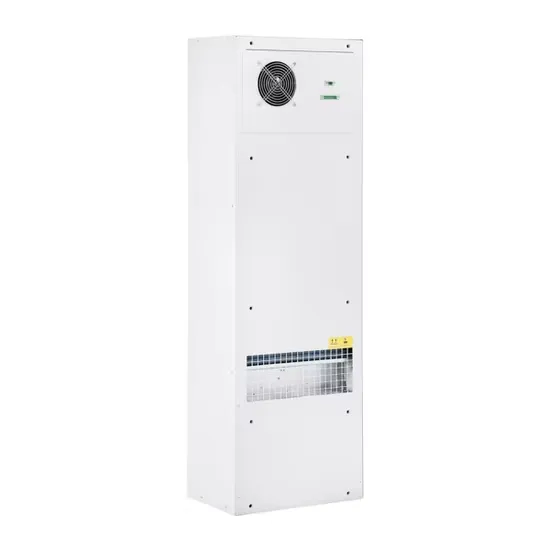
Power conversion and adaptation: The inverter converts DC power (such as batteries or solar panels) into AC power to adapt to the power needs of various communication equipment. This is critical to ensure stable operation of base station equipment regardless of power source type. The following are some specific applications of inverters. . Pure sine wave inverters produce a smooth, pure waveform identical to—or even cleaner than the electricity provided by ideal utility power supply conditions. This is crucial for several reasons: Preventing Equipment Damage: Sensitive devices like servers, routers, and communication switches contain. . How does a base station work? It usually connects the device to other networks or devices through a dedicated high bandwidth wire of fiber optic connection. Base stations typically have a transceiver, capable of sending and receiving wireless signals; Otherwise if they only send the trailer it will. . In an era where seamless communication is non-negotiable, outdoor inverters for communication base stations play a pivotal role in maintaining uninterrupted connectivity.
[PDF Version]
 MENU